These articles are taken from the quarterly Chapel magazine from a series on the Attributes of God
What do you believe about God?

“The deceit, the lie of the Devil consists of this, that he wishes to make man believe that he can live without God's Word” Dietrich Bonhoeffer
Cast your mind back to 1989! In Star Trek V: The Final Frontier, Sybok, a renegade Vulcan, takes over the USS Enterprise in search of a "higher being". He believes this being, "God," is at the centre of the galaxy and is essential for the salvation of humanity. However, the "higher being" he seeks is revealed to be none other than a projection of himself, a force of his own image and imagination that leads to his destruction. In other words, while his motives may have been noble, he made a ‘god’ based on himself that turned out to be false.
So many people are prepared to accept that there is a God, a ‘higher being’ that exerts control over the universe and events. But rather than seeking out the true God, revealed in the Bible, they fill in the gaps with their imagination, creating a God in their own likeness.
So many people are prepared to accept that there is a God, a ‘higher being’ that exerts control over the universe and events. But rather than seeking out the true God, revealed in the Bible, they fill in the gaps with their imagination, creating a God in their own likeness.
But God says; “ My thoughts are not your thoughts, Nor are your ways My ways, For as the heavens are higher than the earth, So are My ways higher than your ways, And My thoughts than your thoughts.”
God is beyond our limited and flawed thoughts and understanding. So how do we come to ‘know’ God?
Well, how do you really get to know someone in real life? You spend time in their company, speak with them, move in their circles. Perhaps if they are not local you read or watch a biography about them or spend time with people that know them well, who can tell you first hand about them.
God clearly presents himself to us in the Bible – if you’ve never read a Bible, or attended Church to hear preaching from the Bible, how do you know if your views of God match what he has revealed to us? The amazing thing is that we find in the Bible that we not only can know about God but we can know God personally, through his Son Jesus Christ. (below: The attributes of God, reproduced from Answers in Genesis)
Well, how do you really get to know someone in real life? You spend time in their company, speak with them, move in their circles. Perhaps if they are not local you read or watch a biography about them or spend time with people that know them well, who can tell you first hand about them.
God clearly presents himself to us in the Bible – if you’ve never read a Bible, or attended Church to hear preaching from the Bible, how do you know if your views of God match what he has revealed to us? The amazing thing is that we find in the Bible that we not only can know about God but we can know God personally, through his Son Jesus Christ. (below: The attributes of God, reproduced from Answers in Genesis)
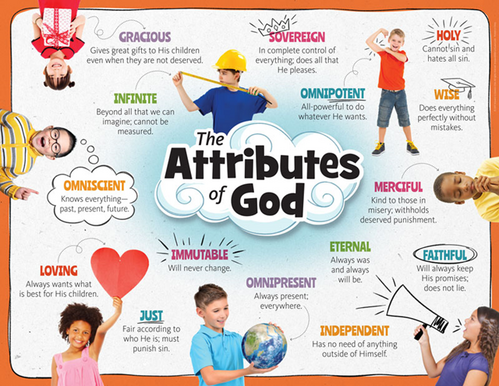
In the Bible, God sets out his character or essential qualities that define who He is – known as his attributes.
These include His omnipotence (all-powerful); His omniscience (all-knowing); His omnipresence (present everywhere); and His immutability (unchanging). Additionally, God is described as holy, just, merciful and gracious, faithful, and loving.
These attributes together paint a picture of God and help us understand that God is perfect, sovereign, and trustworthy—worthy of our worship and trust.
In our daily lives, if we are Christians, understanding these attributes can bring us comfort and confidence. For example, knowing that God is omniscient reassures us that He understands our struggles and needs fully. His omnipotence reminds us that nothing is impossible for Him, encouraging us to trust in His power during difficult times. His omnipresence means we are never alone; God is always with us, providing guidance and support. And His perfect goodness and love inspires us to reflect those qualities in our own actions, fostering kindness and integrity.
These include His omnipotence (all-powerful); His omniscience (all-knowing); His omnipresence (present everywhere); and His immutability (unchanging). Additionally, God is described as holy, just, merciful and gracious, faithful, and loving.
These attributes together paint a picture of God and help us understand that God is perfect, sovereign, and trustworthy—worthy of our worship and trust.
In our daily lives, if we are Christians, understanding these attributes can bring us comfort and confidence. For example, knowing that God is omniscient reassures us that He understands our struggles and needs fully. His omnipotence reminds us that nothing is impossible for Him, encouraging us to trust in His power during difficult times. His omnipresence means we are never alone; God is always with us, providing guidance and support. And His perfect goodness and love inspires us to reflect those qualities in our own actions, fostering kindness and integrity.
You may ask, how can God be both holy and just, as well as loving and merciful to sinners? Great question!
This is the mystery of God, that he can perfectly and completely be all of these things in all of his being. But we can understand some of this. God's justice, mercy, and holiness are all interconnected aspects of His nature.
His justice ensures that sin is ultimately addressed and that right is upheld, meaning that wrongdoing doesn't go unpunished. At the same time, His mercy shows His compassion and willingness to forgive sinners, providing a way of being saved. His holiness reflects His perfect purity and separation from sin, which underscores the seriousness of sin and the need for justice.
Together, these qualities create a balanced understanding: God who is holy, just and merciful sent His Son to reconcile sinners like us to Him through His death. In Christ’s death He took the just penalty for sin and paid the price of our salvation so that all who put their trust and faith in Him will be forgiven and re-united to the Father as His children. At the cross, God’s love, justice and mercy met!
Do you recognise this God? If the “god” of your understanding loves everyone unconditionally, turns a blind eye to sin and welcomes anyone and everyone into heaven, then sadly, you do not know the God of the Bible; you’ve made a God of your own imagination.
If sin can be so lightly dismissed, then God would not have sent his only Son into the world, to live a perfect life of obedience and suffer and die on the cross to take the punishment our sins deserve. Don’t be deceived by a comfortable message that says “live how you please…God will ultimately accept you”. These things are too serious to leave to chance and imagination – come and hear the Word of God and truly ‘know’ God.
His justice ensures that sin is ultimately addressed and that right is upheld, meaning that wrongdoing doesn't go unpunished. At the same time, His mercy shows His compassion and willingness to forgive sinners, providing a way of being saved. His holiness reflects His perfect purity and separation from sin, which underscores the seriousness of sin and the need for justice.
Together, these qualities create a balanced understanding: God who is holy, just and merciful sent His Son to reconcile sinners like us to Him through His death. In Christ’s death He took the just penalty for sin and paid the price of our salvation so that all who put their trust and faith in Him will be forgiven and re-united to the Father as His children. At the cross, God’s love, justice and mercy met!
Do you recognise this God? If the “god” of your understanding loves everyone unconditionally, turns a blind eye to sin and welcomes anyone and everyone into heaven, then sadly, you do not know the God of the Bible; you’ve made a God of your own imagination.
If sin can be so lightly dismissed, then God would not have sent his only Son into the world, to live a perfect life of obedience and suffer and die on the cross to take the punishment our sins deserve. Don’t be deceived by a comfortable message that says “live how you please…God will ultimately accept you”. These things are too serious to leave to chance and imagination – come and hear the Word of God and truly ‘know’ God.
The attributes of God: Love
https://www.bbc.co.uk/religion/religions/christianity/history/welshrevival_1.shtml Just after eleven o'clock on a Wednesday evening in 1904, a solo voice rang out with the hymn "Here is love vast as the ocean". Maybe a thousand people were in Ebenezer Baptist Church, Abertillery at the time, leaning over the galleries, packing every pew and squeezing into every spare corner. Meetings like it were taking place across Wales night after night, with fervent prayer and passionate singing - and similar disregard for the clock. It was reckoned that in little over a year a hundred thousand people had made a commitment to Jesus Christ.
Whole communities changed, as men and women found themselves drawn into a powerful experience of God; and the hymn that soloist struck up spontaneously about "love vast as the ocean" was heard so often that it became known as "the love song of the revival." A simple, but rich hymn text written by William Rees, a 19th-century Welsh farmer, author, poet, and minister telling of the deep and abundant love of God and our response to that love.
Whole communities changed, as men and women found themselves drawn into a powerful experience of God; and the hymn that soloist struck up spontaneously about "love vast as the ocean" was heard so often that it became known as "the love song of the revival." A simple, but rich hymn text written by William Rees, a 19th-century Welsh farmer, author, poet, and minister telling of the deep and abundant love of God and our response to that love.
Here is love, vast as the ocean,
Loving-kindness as the flood;
When the Prince of Life, my ransom,
Shed for me his precious blood.
Who his love will not remember?
Who can cease to sing his praise?
He shall never be forgotten,
Through Heav’n’s everlasting days
Loving-kindness as the flood;
When the Prince of Life, my ransom,
Shed for me his precious blood.
Who his love will not remember?
Who can cease to sing his praise?
He shall never be forgotten,
Through Heav’n’s everlasting days

On the mount of crucifixion,
Fountains opened deep and wide,
Through the flood-gates of God’s mercy,
Flowed the vast and gracious tide;
Grace and love, like mighty rivers
Poured incessant from above,
And God’s peace and perfect justice
Kissed a guilty world in love.
Fountains opened deep and wide,
Through the flood-gates of God’s mercy,
Flowed the vast and gracious tide;
Grace and love, like mighty rivers
Poured incessant from above,
And God’s peace and perfect justice
Kissed a guilty world in love.
The South Wales Gazette said of the Revival; "it...has been the absorbing theme of thought and discussion. Before it, the War, the state of trade, ordinary and extraordinary political topics, and even football, have been thrown into the shade as topics of general conversation.
Drunkards have been soberised, publicans have lost much business, conduct on public streets has been elevated, and the police and magistrates have had quieter times... The bottom of the pits have been utilised as centres for prayer and praise meetings, and there has been a general raising of the standard of public life."
It wasn’t only people leading outwardly dubious lives that were impacted. The pastor of Ebenezer Baptist Church, Abertillery at the time, the Rev David Collier, wrote: “...some deeply intelligent but unconverted men, who had always led exemplary lives, would feel such sorrow of soul as made them tremble, turn deathly pale, and cry out for the prayers of their brethren... “.The love of God, coupled with an understanding of his justice and an experience of His mercy and grace through the Lord Jesus Christ has the power to transform lives, then and still today. Here is love, vast as the ocean… (reproduced from material by Roy Jenkins (BBC)
Below: collage from HSC Youth Work based William Rees’s hymn
Drunkards have been soberised, publicans have lost much business, conduct on public streets has been elevated, and the police and magistrates have had quieter times... The bottom of the pits have been utilised as centres for prayer and praise meetings, and there has been a general raising of the standard of public life."
It wasn’t only people leading outwardly dubious lives that were impacted. The pastor of Ebenezer Baptist Church, Abertillery at the time, the Rev David Collier, wrote: “...some deeply intelligent but unconverted men, who had always led exemplary lives, would feel such sorrow of soul as made them tremble, turn deathly pale, and cry out for the prayers of their brethren... “.The love of God, coupled with an understanding of his justice and an experience of His mercy and grace through the Lord Jesus Christ has the power to transform lives, then and still today. Here is love, vast as the ocean… (reproduced from material by Roy Jenkins (BBC)
Below: collage from HSC Youth Work based William Rees’s hymn

In the last article we asked ’can you truly know God?’ and we introduced what the Bible says about God’s character or essential qualities that define who He is – known as his attributes.
This time we’re talking about LOVE. In our modern society, love is rooted in feelings, attraction, or personal satisfaction. Love is relative and subjective. If someone or something makes me happy, I’ll enjoy it as long as it feels good or benefits me (all to often regardless of whether it hurts others or is unnatural or selfish). The Bible’s teaching on love is completely different.
One of the most comforting and awe-inspiring truths revealed in the Bible is that God is love (1 John 4:8). God is both the essence and definition of love. But in the Bible, this love is never considered in isolation—it is one of God’s many perfect attributes, always in harmony with His holiness, justice, sovereignty, and truth. God’s love is not sentimental or fickle, as often portrayed in popular culture, but is rooted in His eternal, unchanging nature.
God’s love is sovereign. He loves because He chooses to love, not because of anything in us. “In love He predestined us for adoption to Himself as sons through Jesus Christ” (Ephesians 1:4–5). This means His love is not earned, nor can it be lost. It is grounded in His gracious will.
A central verse that reveals the depth of God's love for sinners is John 3:16: “For God so loved the world, that he gave his only Son, that whoever believes in him should not perish but have eternal life.” This verse proclaims the astonishing truth that God, in His mercy, sent His Son into a world in rebellion. The “world” here is not lovely or worthy, but lost and fallen. God's love is displayed not in overlooking sin, but in providing a Savior who would bear the punishment sin deserves. In this act, God's love is both sacrificial (it gives at great cost) and redemptive (it restores), offered to all, yet effectually applied to those whom the Spirit enables to trust in Christ.
God’s love is also holy. It does not ignore sin but moves God to act to save sinners without compromising His justice. That’s why the cross is the ultimate display of divine love: “But God shows his love for us in that while we were still sinners, Christ died for us” (Romans 5:8). At Calvary, God’s love and justice meet. Jesus bore the penalty we deserved so that those who believe in Him could be forgiven and brought into fellowship with the Father.
Importantly, God's love is particular and covenantal. While God has a general benevolence toward all creation (Matthew 5:45), His saving love is reserved for His people—those chosen in Christ before the foundation of the world. This covenant love (Hebrew: hesed) is steadfast, faithful, and unbreakable. It assures believers that nothing “will be able to separate us from the love of God in Christ Jesus our Lord” (Romans 8:39).
The Bible does not reduce God’s love to mere emotional affection. It sees God's love as active, powerful, and redemptive. It assures us that the God who rules the universe is also the God who tenderly cares for His sheep, disciplines them in love, and will never abandon them.
In a world where love is often confused with permissiveness or passion, the biblical view of God’s love stands as a firm foundation. It is a love that saves, sanctifies, and secures. It is a love that points us to worship—not just because God loves us, but because of the kind of God He is: holy, sovereign, and abundantly merciful.
You too can know this love that never fails—it is not dependent on anything in you, or about you, it is free to “whoever calls on the name of the Lord… shall be saved”. Such love can never fail.
This time we’re talking about LOVE. In our modern society, love is rooted in feelings, attraction, or personal satisfaction. Love is relative and subjective. If someone or something makes me happy, I’ll enjoy it as long as it feels good or benefits me (all to often regardless of whether it hurts others or is unnatural or selfish). The Bible’s teaching on love is completely different.
One of the most comforting and awe-inspiring truths revealed in the Bible is that God is love (1 John 4:8). God is both the essence and definition of love. But in the Bible, this love is never considered in isolation—it is one of God’s many perfect attributes, always in harmony with His holiness, justice, sovereignty, and truth. God’s love is not sentimental or fickle, as often portrayed in popular culture, but is rooted in His eternal, unchanging nature.
God’s love is sovereign. He loves because He chooses to love, not because of anything in us. “In love He predestined us for adoption to Himself as sons through Jesus Christ” (Ephesians 1:4–5). This means His love is not earned, nor can it be lost. It is grounded in His gracious will.
A central verse that reveals the depth of God's love for sinners is John 3:16: “For God so loved the world, that he gave his only Son, that whoever believes in him should not perish but have eternal life.” This verse proclaims the astonishing truth that God, in His mercy, sent His Son into a world in rebellion. The “world” here is not lovely or worthy, but lost and fallen. God's love is displayed not in overlooking sin, but in providing a Savior who would bear the punishment sin deserves. In this act, God's love is both sacrificial (it gives at great cost) and redemptive (it restores), offered to all, yet effectually applied to those whom the Spirit enables to trust in Christ.
God’s love is also holy. It does not ignore sin but moves God to act to save sinners without compromising His justice. That’s why the cross is the ultimate display of divine love: “But God shows his love for us in that while we were still sinners, Christ died for us” (Romans 5:8). At Calvary, God’s love and justice meet. Jesus bore the penalty we deserved so that those who believe in Him could be forgiven and brought into fellowship with the Father.
Importantly, God's love is particular and covenantal. While God has a general benevolence toward all creation (Matthew 5:45), His saving love is reserved for His people—those chosen in Christ before the foundation of the world. This covenant love (Hebrew: hesed) is steadfast, faithful, and unbreakable. It assures believers that nothing “will be able to separate us from the love of God in Christ Jesus our Lord” (Romans 8:39).
The Bible does not reduce God’s love to mere emotional affection. It sees God's love as active, powerful, and redemptive. It assures us that the God who rules the universe is also the God who tenderly cares for His sheep, disciplines them in love, and will never abandon them.
In a world where love is often confused with permissiveness or passion, the biblical view of God’s love stands as a firm foundation. It is a love that saves, sanctifies, and secures. It is a love that points us to worship—not just because God loves us, but because of the kind of God He is: holy, sovereign, and abundantly merciful.
You too can know this love that never fails—it is not dependent on anything in you, or about you, it is free to “whoever calls on the name of the Lord… shall be saved”. Such love can never fail.
The attributes of God: The All-Knowing God and the Christmas Story
At Christmas, Christians celebrate the astonishing truth that the eternal Son of God came to earth and took on human form. Yet the meaning of Christmas becomes even richer when we understand it in the light of God’s omniscience—His perfect, exhaustive knowledge of all things.
In this series of articles on the attributes of God, we explore what God’s omniscience means and how it makes the birth of Jesus a moment of divine purpose rather than sentimental imagery.
The All-Knowing Lord of Creation
The Bible consistently declares that God knows all things—past, present, and future— fully, instantly and effortlessly. This is called omniscience. David said in Psalm 139:4, “Even before a word is on my tongue, behold, O LORD, you know it altogether.”
In other words, God has never learned anything. He has never been surprised. He has never reacted to events He did not foresee. He knows all things because He has ordained all things according to His perfect wisdom. Therefore, nothing happens “by chance,” because everything unfolds under God’s perfect knowledge and sovereign will.
God’s Foreknowledge and the Fall
A crucial part of the Christmas message is understanding why Jesus needed to be born at all. God knew before the creation or foundation of the world that Adam and Eve would fall (sin against God by breaking his commandments). The Fall was not a surprise to Him, nor did it derail His purposes. We must also understand that God did not cause evil. Rather, God permitted the Fall as part of His own wise and holy plan that would reveal His mercy, grace, justice, and redeeming love.
Once Adam sinned, all humanity (all people born after Adam) fell with him. We are rebels who cannot return to God by our own efforts. But God already had a plan to save sinners. This is why Scripture can say that grace was given to us “before the ages began” (2 Tim. 1:9). In short; before Adam fell, God had already planned to send a Redeemer (Jesus, the Son of God).
In this series of articles on the attributes of God, we explore what God’s omniscience means and how it makes the birth of Jesus a moment of divine purpose rather than sentimental imagery.
The All-Knowing Lord of Creation
The Bible consistently declares that God knows all things—past, present, and future— fully, instantly and effortlessly. This is called omniscience. David said in Psalm 139:4, “Even before a word is on my tongue, behold, O LORD, you know it altogether.”
In other words, God has never learned anything. He has never been surprised. He has never reacted to events He did not foresee. He knows all things because He has ordained all things according to His perfect wisdom. Therefore, nothing happens “by chance,” because everything unfolds under God’s perfect knowledge and sovereign will.
God’s Foreknowledge and the Fall
A crucial part of the Christmas message is understanding why Jesus needed to be born at all. God knew before the creation or foundation of the world that Adam and Eve would fall (sin against God by breaking his commandments). The Fall was not a surprise to Him, nor did it derail His purposes. We must also understand that God did not cause evil. Rather, God permitted the Fall as part of His own wise and holy plan that would reveal His mercy, grace, justice, and redeeming love.
Once Adam sinned, all humanity (all people born after Adam) fell with him. We are rebels who cannot return to God by our own efforts. But God already had a plan to save sinners. This is why Scripture can say that grace was given to us “before the ages began” (2 Tim. 1:9). In short; before Adam fell, God had already planned to send a Redeemer (Jesus, the Son of God).

Omniscience and the Coming of Christ
This is where the Christmas message shines. The birth of Jesus was not an afterthought or divine improvisation. It was the fulfilment of a plan conceived by the all-knowing God from before the world began. In Revelation 13:8, Christ is described as “the Lamb slain from the foundation of the world.” This means that the incarnation (Jesus taking on human form) was a plan woven into the fabric of history from the very beginning.
At Christmas, we celebrate not simply the birth of a child, but the arrival of the Saviour God had promised long before Eden’s gates closed behind Adam and Eve. He sent His Son at the exact moment He had ordained. Jesus’s coming was “no chance event,” but the fulfilment of God’s promise in Genesis 3:15 that the seed of the woman would crush the serpent.
Why God’s Omniscience Makes Christmas Good News
· Our salvation is not accidental – God knew we would fall—and planned our salvation accordingly
· Christmas is not sentimental mythology – it is the revelation of God’s eternal purpose. Because God’s plan is rooted in His omniscient, unchangeable decree, Christmas is the guarantee that redemption will succeed. As Jesus Himself declared: “All that the Father gives me will come to me” (John 6:37).
· God knows all about us and still provided a Saviour – Christmas reveals the wise, loving heart of an all-knowing God. His love is rooted not in ignorance but in perfect knowledge. He knows every sin we have ever committed—and still sent His Son Jesus, not because we were worthy, but because He is gracious.
The omniscience of God is warm and full of hope. Because God knows all things, He knew our need before we did. Because He knows all things, He planned a salvation that cannot fail if we are called of God. And because He knows all things, the birth of Jesus is not simply the beginning of a story—it is the outworking of an eternal purpose to redeem a people for Himself. This is why Christians rejoice at Christmas: the all-knowing God has acted for our salvation, and His purposes, from eternity to Bethlehem to the present day, stand firm forever.
This is where the Christmas message shines. The birth of Jesus was not an afterthought or divine improvisation. It was the fulfilment of a plan conceived by the all-knowing God from before the world began. In Revelation 13:8, Christ is described as “the Lamb slain from the foundation of the world.” This means that the incarnation (Jesus taking on human form) was a plan woven into the fabric of history from the very beginning.
At Christmas, we celebrate not simply the birth of a child, but the arrival of the Saviour God had promised long before Eden’s gates closed behind Adam and Eve. He sent His Son at the exact moment He had ordained. Jesus’s coming was “no chance event,” but the fulfilment of God’s promise in Genesis 3:15 that the seed of the woman would crush the serpent.
Why God’s Omniscience Makes Christmas Good News
· Our salvation is not accidental – God knew we would fall—and planned our salvation accordingly
· Christmas is not sentimental mythology – it is the revelation of God’s eternal purpose. Because God’s plan is rooted in His omniscient, unchangeable decree, Christmas is the guarantee that redemption will succeed. As Jesus Himself declared: “All that the Father gives me will come to me” (John 6:37).
· God knows all about us and still provided a Saviour – Christmas reveals the wise, loving heart of an all-knowing God. His love is rooted not in ignorance but in perfect knowledge. He knows every sin we have ever committed—and still sent His Son Jesus, not because we were worthy, but because He is gracious.
The omniscience of God is warm and full of hope. Because God knows all things, He knew our need before we did. Because He knows all things, He planned a salvation that cannot fail if we are called of God. And because He knows all things, the birth of Jesus is not simply the beginning of a story—it is the outworking of an eternal purpose to redeem a people for Himself. This is why Christians rejoice at Christmas: the all-knowing God has acted for our salvation, and His purposes, from eternity to Bethlehem to the present day, stand firm forever.
The attributes of God: Justice
If you look carefully at the side of the City Museum in The Square, Winchester, you will see an engraving which reads: “Site of Old Market House. Place of Execution of Lady Lisle. 1685. In the roadway.”
Alice Lisle was publicly executed by an axe in Winchester marketplace on 2 September 1685; the last woman in English history to be beheaded by judicial sentence. Her crime? …giving refuge to a friend who was a nonconformist chaplain fleeing persecution. But unknown to her, the minister was accompanied by another man wanted in connection with a recent uprising led by the Duke of Monmouth against King James I.
Alice Lisle was publicly executed by an axe in Winchester marketplace on 2 September 1685; the last woman in English history to be beheaded by judicial sentence. Her crime? …giving refuge to a friend who was a nonconformist chaplain fleeing persecution. But unknown to her, the minister was accompanied by another man wanted in connection with a recent uprising led by the Duke of Monmouth against King James I.


Alice was arrested and tried for high treason by the infamous Lord Chief Justice George Jefferies, who presided over the trials and executions of hundreds of people in the Bloody Assizes. It is said that pleading not guilty before Judge Jefferies was hardly worth doing as he was renowned for not just passing judgment but behaving as though he were the prosecuting counsel. He would harass and intimidate the witnesses and threaten juries with treason themselves if they returned a not guilty verdict. It seems like Alice’s conviction and punishment was hardly fair, impartial or just, but what is justice, how do we define it and where does it come from? (picture: the arrest of Alice Lisle)
The Justice of God: What It Means and Why It Matters Today
Justice is a word we use every day. We speak about fair courts, equal treatment, and the rule of law. In the United Kingdom, justice is embedded in our legal system, from Parliament’s statutes to the judgments of our courts. But justice is not a human achievement — it is an attribute of God himself.
The Justice of God: What It Means and Why It Matters Today
Justice is a word we use every day. We speak about fair courts, equal treatment, and the rule of law. In the United Kingdom, justice is embedded in our legal system, from Parliament’s statutes to the judgments of our courts. But justice is not a human achievement — it is an attribute of God himself.
The Bible teaches us that God’s justice is an aspect of his holy character. It is not something outside him to which he must conform; rather, justice flows from who he is. Unlike the infamous Judge Jefferies, God can be described as “the righteous judge” whose judgments are always pure and upright. His justice, therefore, is neither arbitrary nor emotional. It is moral perfection expressed consistently.
This has two important implications for our thinking about justice:
1. Justice is objective. It is grounded in God’s character, not human opinion.
2. Justice is moral. It reflects God’s holiness and righteousness.
Justice and Accountability
The Bible teaches that God’s justice requires accountability. Humanity’s fall into sin means that all people stand guilty before a holy God. As the Apostle Paul writes in the Epistle to the Romans, “There is none righteous, no, not one” (Romans 3:10).
This emphasis on accountability has historically shaped national thinking about civil society. If all people are morally responsible before God, then justice in society must involve laws, consequences, and impartial judgment. The theologian R. C. Sproul summarised it this way: God’s justice means he always does what is right according to his own righteous standard. He never overlooks wrongdoing; he never perverts judgment.
Justice and Mercy at the Cross
Yet the Bible shows us that God’s justice is not opposed to his mercy. The two meet at the cross of Jesus Christ when he bore the penalty that justice required. God’s justice demands that sin be punished, either through ourselves or by another. In the death of Christ, God remains just while justifying sinners.
This means divine justice is not cold or cruel. It is satisfied in a way that upholds moral order while providing salvation. Justice is not ignored; it is fulfilled.
How This Relates to Justice in the United Kingdom
The UK’s understanding of justice — fairness before the law, due process, equality of persons — did not arise in a vacuum. Historically, it developed in a culture deeply shaped by Protestant Christianity that contributed key ideas that still underpin British legal thought:
· The rule of law: Because God is just and consistent, law must be applied impartially.
· Equality before the law: Since all stand equally accountable before God, no one is above justice.
· Moral foundations of law: Law is not merely social convention; it reflects moral order.
Today, many in the UK would define justice in secular terms—yet historically, those definitions were derived from a theological conviction: that justice is real because it reflects the character of a just God.
Why It Still Matters
If justice is only a human construct, it can shift with culture and opinion. But if justice ultimately reflects the character of God, then it has permanence and authority beyond politics.
God’s justice is both a comfort and a warning:
· A comfort, because wrongdoing will not have the final word.
· A warning, because moral accountability is real.
And at the centre of it all stands the cross, where justice and mercy meet.
In a nation still shaped by its Protestant heritage, understanding the justice of God helps us understand not only theology, but the deeper roots of how we define justice itself.
The challenge
“So then each of us shall give account of himself to God”. Romans 14:12. If God is perfectly just, it means that one day, when we meet him we will be held accountable for our lives by a just judge, one that cannot be swayed by emotion, clever arguments, indifference, distraction or bribery. God’s justice is unable to ignore wrong-doing—and our only hope is that God’s justice is satisfied by the sacrifice of Jesus Christ if we know and believe He died for us.
This has two important implications for our thinking about justice:
1. Justice is objective. It is grounded in God’s character, not human opinion.
2. Justice is moral. It reflects God’s holiness and righteousness.
Justice and Accountability
The Bible teaches that God’s justice requires accountability. Humanity’s fall into sin means that all people stand guilty before a holy God. As the Apostle Paul writes in the Epistle to the Romans, “There is none righteous, no, not one” (Romans 3:10).
This emphasis on accountability has historically shaped national thinking about civil society. If all people are morally responsible before God, then justice in society must involve laws, consequences, and impartial judgment. The theologian R. C. Sproul summarised it this way: God’s justice means he always does what is right according to his own righteous standard. He never overlooks wrongdoing; he never perverts judgment.
Justice and Mercy at the Cross
Yet the Bible shows us that God’s justice is not opposed to his mercy. The two meet at the cross of Jesus Christ when he bore the penalty that justice required. God’s justice demands that sin be punished, either through ourselves or by another. In the death of Christ, God remains just while justifying sinners.
This means divine justice is not cold or cruel. It is satisfied in a way that upholds moral order while providing salvation. Justice is not ignored; it is fulfilled.
How This Relates to Justice in the United Kingdom
The UK’s understanding of justice — fairness before the law, due process, equality of persons — did not arise in a vacuum. Historically, it developed in a culture deeply shaped by Protestant Christianity that contributed key ideas that still underpin British legal thought:
· The rule of law: Because God is just and consistent, law must be applied impartially.
· Equality before the law: Since all stand equally accountable before God, no one is above justice.
· Moral foundations of law: Law is not merely social convention; it reflects moral order.
Today, many in the UK would define justice in secular terms—yet historically, those definitions were derived from a theological conviction: that justice is real because it reflects the character of a just God.
Why It Still Matters
If justice is only a human construct, it can shift with culture and opinion. But if justice ultimately reflects the character of God, then it has permanence and authority beyond politics.
God’s justice is both a comfort and a warning:
· A comfort, because wrongdoing will not have the final word.
· A warning, because moral accountability is real.
And at the centre of it all stands the cross, where justice and mercy meet.
In a nation still shaped by its Protestant heritage, understanding the justice of God helps us understand not only theology, but the deeper roots of how we define justice itself.
The challenge
“So then each of us shall give account of himself to God”. Romans 14:12. If God is perfectly just, it means that one day, when we meet him we will be held accountable for our lives by a just judge, one that cannot be swayed by emotion, clever arguments, indifference, distraction or bribery. God’s justice is unable to ignore wrong-doing—and our only hope is that God’s justice is satisfied by the sacrifice of Jesus Christ if we know and believe He died for us.
The attributes of God: Holiness

The White Glove Inspection
Imagine you have spent all day cleaning your house. You vacuum the floors, dust every shelf, polish the kitchen surfaces, and stand back feeling quite pleased with the result. To your eyes, everything looks spotless.
Then a professional inspector arrives carrying a bright floodlight and a pair of white gloves. As the light shines into corners and across surfaces, dust particles suddenly become visible. The white gloves reveal marks and dirt that you never noticed before. What looked clean by ordinary standards now appears far less perfect.
The problem is not that the house suddenly became dirtier. The problem is that a higher standard of cleanliness exposed what was already there.
Imagine you have spent all day cleaning your house. You vacuum the floors, dust every shelf, polish the kitchen surfaces, and stand back feeling quite pleased with the result. To your eyes, everything looks spotless.
Then a professional inspector arrives carrying a bright floodlight and a pair of white gloves. As the light shines into corners and across surfaces, dust particles suddenly become visible. The white gloves reveal marks and dirt that you never noticed before. What looked clean by ordinary standards now appears far less perfect.
The problem is not that the house suddenly became dirtier. The problem is that a higher standard of cleanliness exposed what was already there.
In a similar way, many people compare themselves with other people and conclude that they are "good enough." But the Bible does not measure us against other people. It measures us against God and His holiness.
The Holiness of God: What It Means and Why It Matters.
Among all the attributes of God revealed in Scripture, holiness occupies a unique place. The Bible speaks of God's love, wisdom, power, justice, and mercy, yet when heaven's worshipers praise God, they do not cry, "Love, love, love," or "Power, power, power." Instead they proclaim:
"Holy, holy, holy, is the LORD of hosts: the whole earth is full of his glory" (Isaiah 6:3).
What Is Holiness?
Holiness carries the meaning of being "set apart" or "separate." When applied to God, holiness means far more than moral goodness. God's holiness is the absolute purity and moral perfection of His entire nature and being. God is not simply better than us; He is altogether different from us. The prophet Isaiah was given a vision of God seated upon His throne. Confronted with the divine holiness, Isaiah did not congratulate himself on being a relatively good man. Instead he cried: “Woe is me! for I am undone (or lost/ruined); because I am a man of unclean lips" (Isaiah 6:5). The closer a person comes to the reality of God's holiness, the more clearly they see their own sinfulness.
God's Holiness Reveals the Seriousness of Sin.
Modern society often treats sin as a mistake, weakness, or personal lifestyle choice. Scripture presents it differently. Sin is rebellion against a holy God. It is the refusal to honour, trust, and obey the One who created us. Because God is holy, sin is not a trivial matter. Every sin, whether public or private, is an offence against His perfect character. The standard is not comparison with other people. The standard is God's own holiness.
God's Holiness Requires Justice.
A holy God cannot simply overlook evil. Human judges who ignored crimes would be considered corrupt. Likewise, God's holiness requires that sin be judged. He does not punish sin because He is harsh or vindictive, but because He is perfectly righteous. It is an expression of His holiness.
God's Holiness Calls His People to Holiness.
Christians are called to reflect His character. The Apostle Peter writes: "As he who called you is holy, you also be holy in all your conduct". Christians are not called to holiness in order to earn salvation. Rather, having been saved by grace, they are called to grow in likeness to their holy God. A Christian, willfully and repeatedly revelling in sin is not a Christian.
The Gospel and the Holiness of God. God's holiness presents humanity with a serious problem. If God is perfectly holy and we are sinners, how can we stand before Him? Many people assume that God will simply overlook their sins. Yet a holy God cannot deny His own character.
The wonder of the gospel is that God Himself provides the solution. Jesus lived the holy life that sinners have failed to live. He then bore the judgment that sinners deserved. The cross demonstrates both the seriousness of sin, in that it required the death of the Son of God, and the greatness of God's grace that He willingly gave His Son to save sinners. Through faith in Christ, believers are forgiven, declared righteous before God, and progressively transformed into holiness. The gospel offers what sinful people could never achieve themselves: acceptance before a holy God through the righteousness of Jesus Christ alone.
The Holiness of God: What It Means and Why It Matters.
Among all the attributes of God revealed in Scripture, holiness occupies a unique place. The Bible speaks of God's love, wisdom, power, justice, and mercy, yet when heaven's worshipers praise God, they do not cry, "Love, love, love," or "Power, power, power." Instead they proclaim:
"Holy, holy, holy, is the LORD of hosts: the whole earth is full of his glory" (Isaiah 6:3).
What Is Holiness?
Holiness carries the meaning of being "set apart" or "separate." When applied to God, holiness means far more than moral goodness. God's holiness is the absolute purity and moral perfection of His entire nature and being. God is not simply better than us; He is altogether different from us. The prophet Isaiah was given a vision of God seated upon His throne. Confronted with the divine holiness, Isaiah did not congratulate himself on being a relatively good man. Instead he cried: “Woe is me! for I am undone (or lost/ruined); because I am a man of unclean lips" (Isaiah 6:5). The closer a person comes to the reality of God's holiness, the more clearly they see their own sinfulness.
God's Holiness Reveals the Seriousness of Sin.
Modern society often treats sin as a mistake, weakness, or personal lifestyle choice. Scripture presents it differently. Sin is rebellion against a holy God. It is the refusal to honour, trust, and obey the One who created us. Because God is holy, sin is not a trivial matter. Every sin, whether public or private, is an offence against His perfect character. The standard is not comparison with other people. The standard is God's own holiness.
God's Holiness Requires Justice.
A holy God cannot simply overlook evil. Human judges who ignored crimes would be considered corrupt. Likewise, God's holiness requires that sin be judged. He does not punish sin because He is harsh or vindictive, but because He is perfectly righteous. It is an expression of His holiness.
God's Holiness Calls His People to Holiness.
Christians are called to reflect His character. The Apostle Peter writes: "As he who called you is holy, you also be holy in all your conduct". Christians are not called to holiness in order to earn salvation. Rather, having been saved by grace, they are called to grow in likeness to their holy God. A Christian, willfully and repeatedly revelling in sin is not a Christian.
The Gospel and the Holiness of God. God's holiness presents humanity with a serious problem. If God is perfectly holy and we are sinners, how can we stand before Him? Many people assume that God will simply overlook their sins. Yet a holy God cannot deny His own character.
The wonder of the gospel is that God Himself provides the solution. Jesus lived the holy life that sinners have failed to live. He then bore the judgment that sinners deserved. The cross demonstrates both the seriousness of sin, in that it required the death of the Son of God, and the greatness of God's grace that He willingly gave His Son to save sinners. Through faith in Christ, believers are forgiven, declared righteous before God, and progressively transformed into holiness. The gospel offers what sinful people could never achieve themselves: acceptance before a holy God through the righteousness of Jesus Christ alone.
How should Christians respond to social challenges in a way that is faithful to God's holiness?
Each June, LGBTQ pride month becomes highly visible in public life. Due to the varying responses from churches it has aroused confusion about what God’s word actually says and how followers of Christ should respond in a way that is faithful to God's holiness and reflective of the transforming power of the gospel.
A Christian response must begin not with cultural trends or political arguments, but with the character of God Himself. His standards do not change with culture, public opinion, or historical movements. Because God is holy, He defines what is good, right, and true. Therefore, Christians must evaluate all human behaviour—including their own—according to God's revealed Word.
The Bible consistently teaches that God's design for relationships and sexual intimacy is within the covenant of marriage between one man and one woman (Genesis 2:24; Matthew 19:4–6). Scripture identifies all sexual activity outside this covenant as sin, whether heterosexual or homosexual. All sin comes with a grave warning:
“Do you not know that the unrighteous will not inherit the kingdom of God? Do not be deceived. Neither fornicators, nor idolaters, nor adulterers, nor homosexuals, nor sodomites, nor thieves, nor covetous, nor drunkards, nor revilers, nor extortioners will inherit the kingdom of God (1 Corinthians 6:9-10). Therefore Christians cannot celebrate, affirm, or endorse behaviour that God calls sin. To do so would be inconsistent with God's holiness and the authority of Scripture.
The church is called to be "the pillar and foundation of the truth" (1 Timothy 3:15), not a reflection of prevailing culture. Faithfulness requires Christians to uphold biblical teaching even when it is unpopular. Consequently, Christians should not modify biblical teaching to gain cultural acceptance.
A Christian response must begin not with cultural trends or political arguments, but with the character of God Himself. His standards do not change with culture, public opinion, or historical movements. Because God is holy, He defines what is good, right, and true. Therefore, Christians must evaluate all human behaviour—including their own—according to God's revealed Word.
The Bible consistently teaches that God's design for relationships and sexual intimacy is within the covenant of marriage between one man and one woman (Genesis 2:24; Matthew 19:4–6). Scripture identifies all sexual activity outside this covenant as sin, whether heterosexual or homosexual. All sin comes with a grave warning:
“Do you not know that the unrighteous will not inherit the kingdom of God? Do not be deceived. Neither fornicators, nor idolaters, nor adulterers, nor homosexuals, nor sodomites, nor thieves, nor covetous, nor drunkards, nor revilers, nor extortioners will inherit the kingdom of God (1 Corinthians 6:9-10). Therefore Christians cannot celebrate, affirm, or endorse behaviour that God calls sin. To do so would be inconsistent with God's holiness and the authority of Scripture.
The church is called to be "the pillar and foundation of the truth" (1 Timothy 3:15), not a reflection of prevailing culture. Faithfulness requires Christians to uphold biblical teaching even when it is unpopular. Consequently, Christians should not modify biblical teaching to gain cultural acceptance.

This means:
The church consists of people who were once spiritually dead in sin but have been saved by grace alone through faith alone in Christ alone.
- Calling sin what God calls sin.
- Rejecting attempts to redefine marriage.
- Rejecting the idea that sexual identity is the defining feature of a person.
- Affirming that God's design for humanity is good and wise.
The church consists of people who were once spiritually dead in sin but have been saved by grace alone through faith alone in Christ alone.
Therefore Christians must approach others not as morally superior people but as sinners who have received mercy. The church's message therefore is not:
"Clean yourself up and then come to Christ." Nor is it: “Remain exactly as you are."
Rather, it is: "Come to Christ as you are, and He will forgive, justify, and transform you."
A true Christian response to pride month should therefore be a faithful and loving witness that God is holy, and all people have sinned against Him. Yet in His mercy, God sent His Son, Jesus Christ, to live the righteous life we could not live, die for sinners, and rise again in victory over sin and death.
Christians are called to uphold God's holy standards without compromise, love their neighbours without partiality, and proclaim with confidence that the grace of God in Christ is powerful enough to forgive every sin and transform every sinner who comes to Him in repentance and faith. This is true love, that doesn’t condemn or condone, but graciously directs sinners to Christ Jesus for salvation.
Christians are called to uphold God's holy standards without compromise, love their neighbours without partiality, and proclaim with confidence that the grace of God in Christ is powerful enough to forgive every sin and transform every sinner who comes to Him in repentance and faith. This is true love, that doesn’t condemn or condone, but graciously directs sinners to Christ Jesus for salvation.